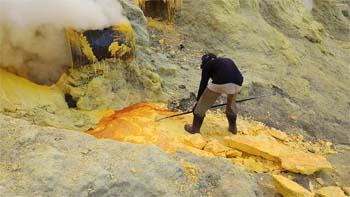
Mining is the extraction of geological materials and minerals from the surface of the Earth. Mining is required to obtain most materials that cannot be grown through agricultural processes, or feasibly created artificially in a laboratory or factory. Ores recovered by mining include metals, coal, oil shale, gemstones, limestone, chalk, dimension stone, rock salt, potash, gravel, and clay. The ore must be a rock or mineral that contains a valuable constituent, can be extracted or mined, and sold for profit. Mining in a wider sense includes extraction of any non-renewable resource such as petroleum, natural gas, or even water.
Modern mining processes involve prospecting for ore bodies, analysis of the profit potential of a proposed mine, extraction of the desired materials, and final reclamation or restoration of the land after the mine is closed. Mining materials are often obtained from ore bodies, lodes, veins, seams, reefs, or placer deposits. The exploitation of these deposits for raw materials is dependent on investment, labor, energy, refining, and transportation costs.
Mining operations can have negative environmental impacts, both during mining and after the mine closes. Hence, most of the world's nations have enacted regulations to reduce the impact; however, the outsized role of mining in generating business for often rural, remote, or economically depressed communities means that governments frequently fail to enforce them fully. Work safety has long been a concern as well, and where enforced, modern practices have significantly improved safety in mines. Unregulated, poorly regulated or illegal mining, especially in developing economies, frequently contributes to local human rights violations and environmental conflicts. Mining can also perpetuate political instability through resource conflicts.